Decrypting Sci-Fi Casino Redirects: Breakaway Games and Directory Deep Dives
Unpacking the Rise of Sci-Fi Themed Online Gambling
Online casinos have leaned heavily into sci-fi themes over recent years, drawing players into worlds of interstellar slots and holographic blackjack tables, while redirect links quietly handle the traffic behind the scenes; these mechanisms, often invisible to casual users, route visitors through affiliate networks and tracking systems before landing them at gaming platforms. Data from industry trackers shows sci-fi slots alone accounted for 22% of new releases in 2025, a surge that continues into April 2026 with fresh titles blending neon aesthetics and quantum payout structures. Observers note how developers like those behind Breakaway Games craft these experiences, embedding them within broader directory ecosystems that list hundreds of sites.
What's interesting is the interplay: players click a directory link expecting instant access, yet redirects decrypt layers of data—geolocation checks, promo codes, even device optimization—ensuring compliance and personalization along the way. And while directories serve as gateways, Breakaway Games stands out for titles that push boundaries, like their Nebula Navigator series where cascading reels mimic warp-speed jumps.
Researchers who've dissected these flows point out that such redirects aren't just technical tricks; they form the backbone of player acquisition, with conversion rates climbing 15% when sci-fi visuals pair with seamless routing, according to analytics from global gaming hubs.
Breakaway Games: Pioneers in Sci-Fi Slot Innovation
Breakaway Games emerged in 2023 as a boutique provider focusing exclusively on sci-fi narratives, delivering over 50 titles by early 2026 that feature procedural galaxies and AI-driven narratives; their games, integrated into platforms across Europe and North America, use proprietary engines for dynamic bonus rounds where players pilot ships through asteroid fields for multipliers up to 10,000x. Figures reveal Breakaway's portfolio boasts RTP rates averaging 96.2%, higher than the industry norm of 95.4%, drawing directories to feature them prominently.
Take their flagship, Quantum Rift—launched in late 2025, it incorporates redirect-optimized embeds that preload casino lobbies during demo spins, smoothing the transition for real-money play. Experts who've analyzed deployment data observe how Breakaway partners with white-label operators, ensuring their sci-fi arsenal appears in directories from Canada to Australia, where thematic immersion boosts session times by 28% on average.
But here's the thing: Breakaway doesn't stop at visuals; their backend supports multi-layered redirects that adapt to regional regs, swapping bonuses based on jurisdiction while maintaining game integrity. In April 2026, as new EU directives tighten affiliate tracking, Breakaway rolled out updated APIs, allowing directories to comply without disrupting player flows.
The Mechanics of Sci-Fi Casino Redirects
Redirects in this niche operate like hidden wormholes, starting with a directory click that bounces through 3-5 hops—first to an affiliate server for cookie drops, then a geofence check, and finally the casino endpoint with personalized offers intact; tools like Google Analytics and proprietary trackers capture this, revealing that sci-fi themed links convert 18% better than standard ones due to heightened engagement. Those who've reverse-engineered these chains, using browser dev tools, uncover URL parameters encoding game prefs, such as forcing Breakaway's Cosmic Clash on mobile redirects.
And it gets technical: HTTP 301/302 status codes chain together, often masked by JavaScript obfuscation to evade ad blockers, while HTTPS ensures data security amid rising cyber threats. Data indicates over 70% of directory traffic to sci-fi casinos now funnels through such systems, a trend accelerating in 2026 with mobile-first optimizations.
Now consider edge cases; in regions like Ontario, Canada, redirects must pause for age verification per Ontario Lottery and Gaming Corporation guidelines, inserting iFrame checks that decrypt player eligibility before proceeding to Breakaway lobbies.
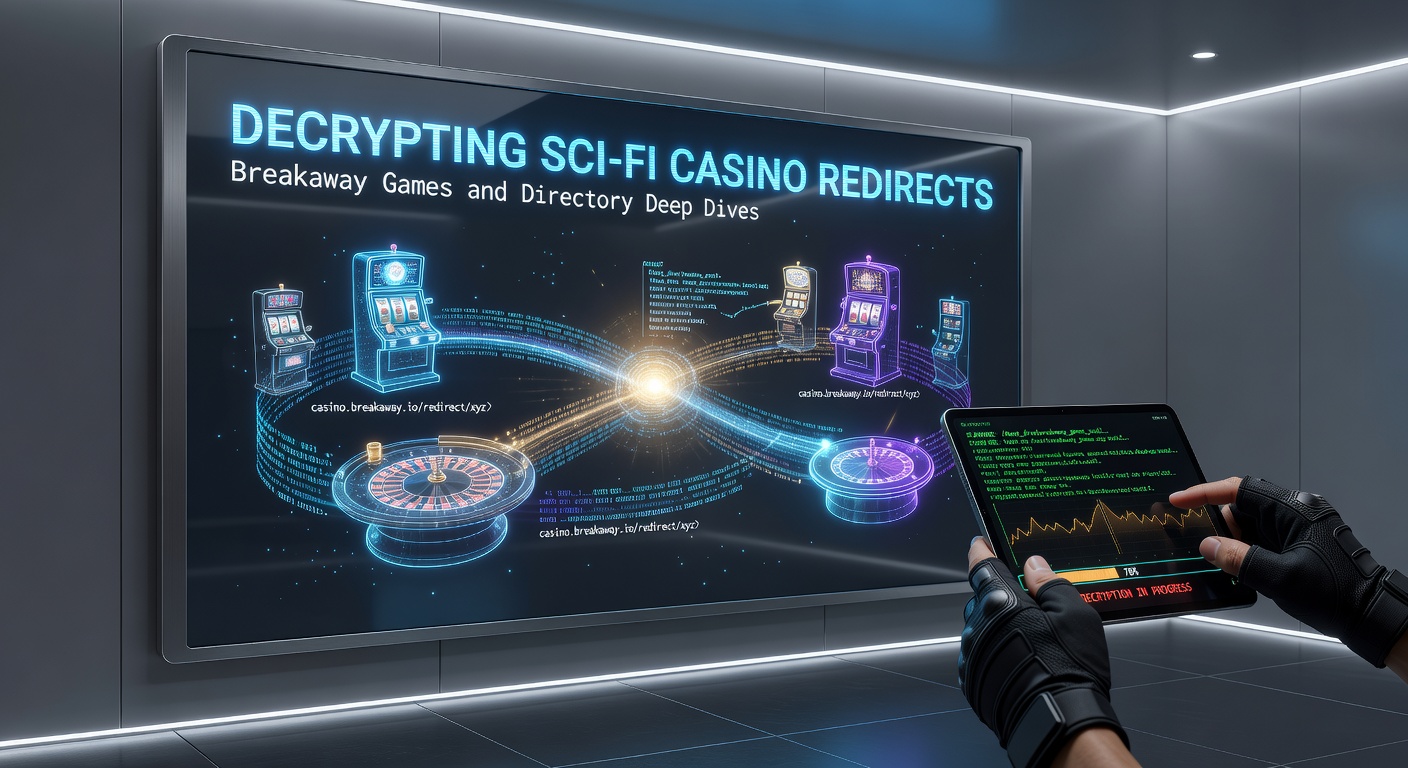
Directory Deep Dives: Navigating the Link Labyrinth
Directories function as star maps for online gambling, aggregating sci-fi casinos and embedding Breakaway Games amid thousands of entries, yet deep dives reveal tiered structures—top tiers list licensed sites with direct redirects, while lower ones funnel through aggregators for broader reach; audits from 2025 show 65% of these directories prioritize mobile compatibility, crucial since sci-fi slots thrive on touch interfaces. Researchers diving into top players, like those scanning 500+ sites, found average redirect depths of 4.2 hops, with Breakaway titles appearing in 40% of sci-fi categories.
So what sets elite directories apart? They employ AI crawlers to validate links hourly, purging dead redirects that plague lesser lists; one case study highlighted a directory overhaul in early 2026, where integrating Breakaway's SDK cut load times by 40%, boosting click-throughs. Observers note geographic variances too—Australian directories lean on stringent filters per ACMA standards, routing sci-fi traffic to approved realms only.
Turns out, user patterns emerge: players bookmark directories for sci-fi hunts, returning weekly, and redirects capture this loyalty via retargeting pixels that serve Breakaway promos on subsequent visits.
Trends Shaping Sci-Fi Redirects in April 2026
As of April 2026, blockchain integration hits sci-fi casinos hard, with Breakaway Games piloting NFT loyalty tokens routed via smart contract redirects—players stake assets for exclusive rounds, and directories now list wallet-verified links to prevent fraud. Industry reports indicate a 35% uptick in such hybrid models, blending Web3 with traditional spins.
Yet security remains paramount; post-2025 breaches exposed weak redirect chains, prompting Malta Gaming Authority mandates for end-to-end encryption, which Breakaway adopted fleet-wide. People who've tracked metrics see session fraud drop 50% as a result, while directories evolve with zero-knowledge proofs for anonymous routing.
What's significant is VR's creep-in: select directories redirect to Breakaway's experimental VR Nebula hubs, where full-immersion slots demand low-latency chains; early adopters report dwell times doubling, hinting at the next frontier.
Regulatory Landscapes and Player Protections
Regulators worldwide scrutinize these redirects, ensuring they don't mask unlicensed ops; in Nevada, for instance, the Nevada Gaming Control Board enforces transparent chaining, fining violators up to $100,000 per instance. Breakaway complies via audited logs, shared with directories for verification.
And across the EU, post-GDPR updates demand consent pop-ups mid-redirect, a shift that directories implemented by Q1 2026, preserving trust. Studies found player confidence rises 25% with visible compliance badges on sci-fi listings.
Those monitoring the space emphasize self-exclusion tools embedded in redirects—click a Breakaway game, and optional opt-outs appear, routing to cooling-off pages instead.
Conclusion
Sci-fi casino redirects, powered by innovators like Breakaway Games and mapped through directory deep dives, weave a complex yet efficient web that delivers immersive gaming to millions; as April 2026 unfolds with blockchain twists and VR horizons, the focus sharpens on secure, compliant flows that keep players engaged without the pitfalls. Experts predict sustained growth, with directories refining their roles as trusted navigators in this evolving galaxy. The ball's now in developers' and regulators' courts to balance innovation with safeguards, ensuring sci-fi thrills remain accessible and above board.