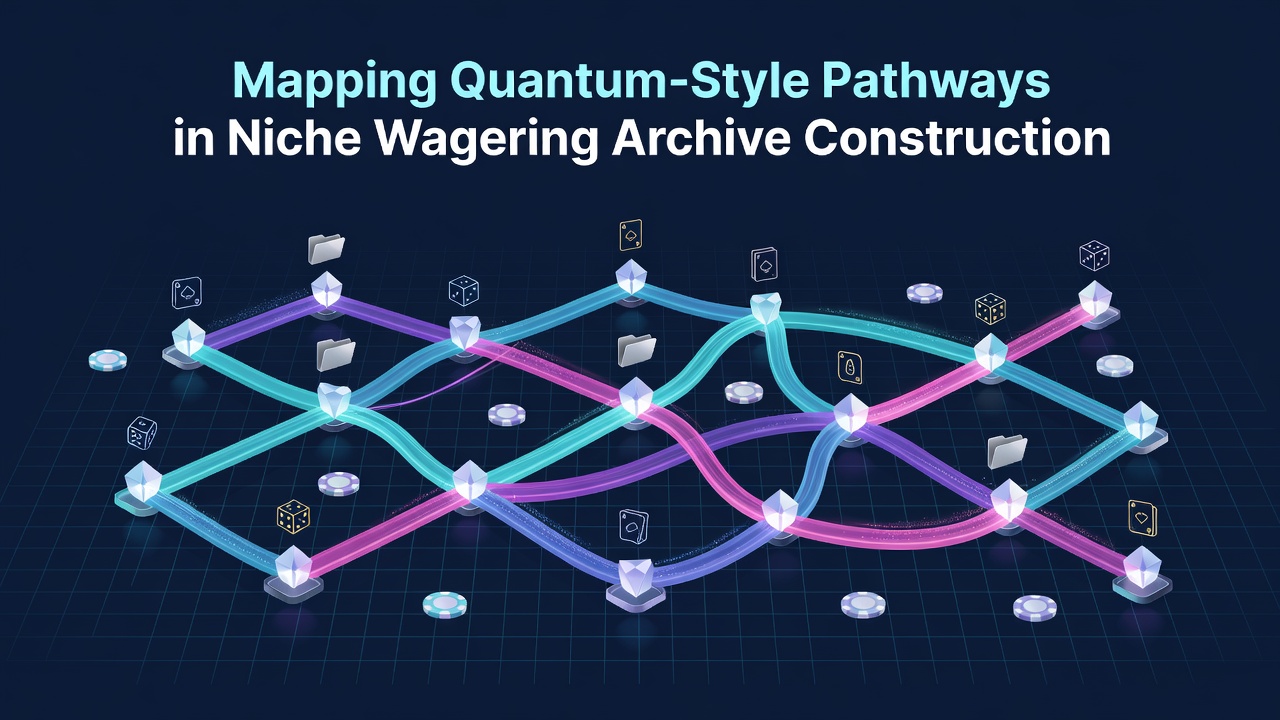
Mapping Quantum-Style Pathways in Niche Wagering Archive Construction
Researchers in digital infrastructure have spent years examining how complex routing systems assemble collections of specialized wagering options, and quantum-style mapping techniques now play a central role in that process. These methods treat data connections as entangled states where one pathway influences multiple others simultaneously, allowing builders to create archives that respond dynamically to user queries across niche probability games.
Core Principles Behind the Mapping Approach
Experts apply superposition concepts to model how individual access points can exist in multiple configurations until a specific route activates them. This approach differs from traditional linear indexing because it accounts for overlapping categories such as regional lottery variants, historical horse racing data sets, and emerging digital table formats. Observers note that teh technique reduces redundancy while expanding coverage, since each mapped element can serve several archive sections without duplication.
Data structures built this way rely on weighted connections that adjust based on traffic patterns and regulatory updates. When a new niche offering appears, the system recalculates pathways rather than rebuilding entire indexes from scratch. Studies from network analysis groups show this method cuts processing time by measurable margins compared with older hierarchical models.
Technical Implementation in Archive Development
Teams constructing these archives begin by identifying seed nodes, which represent primary categories like skill-based card variants or fixed-odds prediction markets. From there, quantum-inspired algorithms generate branching structures that simulate measurement collapse, locking in optimal routes once usage data arrives. The process incorporates feedback loops so that low-performing connections receive lower priority in subsequent recalibrations.
Precision routing becomes essential when archives span multiple jurisdictions, each with distinct compliance requirements. Builders integrate metadata tags that flag jurisdictional boundaries, allowing the mapping engine to reroute traffic automatically. In June 2026, several North American projects demonstrated live updates where pathway adjustments occurred within minutes of regulatory announcements, maintaining uninterrupted access for users.
Integration with Existing Redirect Frameworks
Redirect networks already handle much of the traffic between specialized gaming platforms and central directories. Quantum-style mapping layers additional intelligence onto these networks by predicting which routes will handle future demand spikes. Instead of static redirect tables, the new systems maintain probabilistic models that evolve with each interaction cycle.
One documented case involved an archive covering limited-license gaming jurisdictions across Europe and Asia. Engineers mapped overlapping regulatory pathways so that a single user request could traverse multiple compliance checkpoints without creating separate queues. The resulting structure handled increased query volume during peak periods while keeping response latency stable, according to performance metrics released by the project team.
Challenges and Ongoing Refinements
Scalability remains a focus area because larger archives introduce more potential interference between mapped pathways. Researchers address this through periodic entanglement pruning, where underutilized connections receive reduced computational weight. Industry reports from Canadian gaming associations highlight similar pruning cycles that improved archive query accuracy by measurable percentages over successive iterations.
Another area of refinement involves cross-referencing with external data sources on player behavior trends. When combined with the core mapping engine, these inputs allow archives to surface niche offerings that align with emerging interest patterns. The approach avoids manual curation bottlenecks while preserving the factual integrity of each indexed item.
Conclusion
Mapping quantum-style pathways continues to reshape how specialized wagering archives form and operate. The combination of superposition modeling, dynamic rerouting, adn feedback-driven recalibration delivers structures that adapt to regulatory shifts and usage demands without constant manual intervention. As projects advance through 2026 and beyond, the techniques provide a foundation for archives that remain both comprehensive and responsive across diverse niche gaming categories.