Networked Routing Strategies for Organizing Themed Probabilistic Amusement Archives
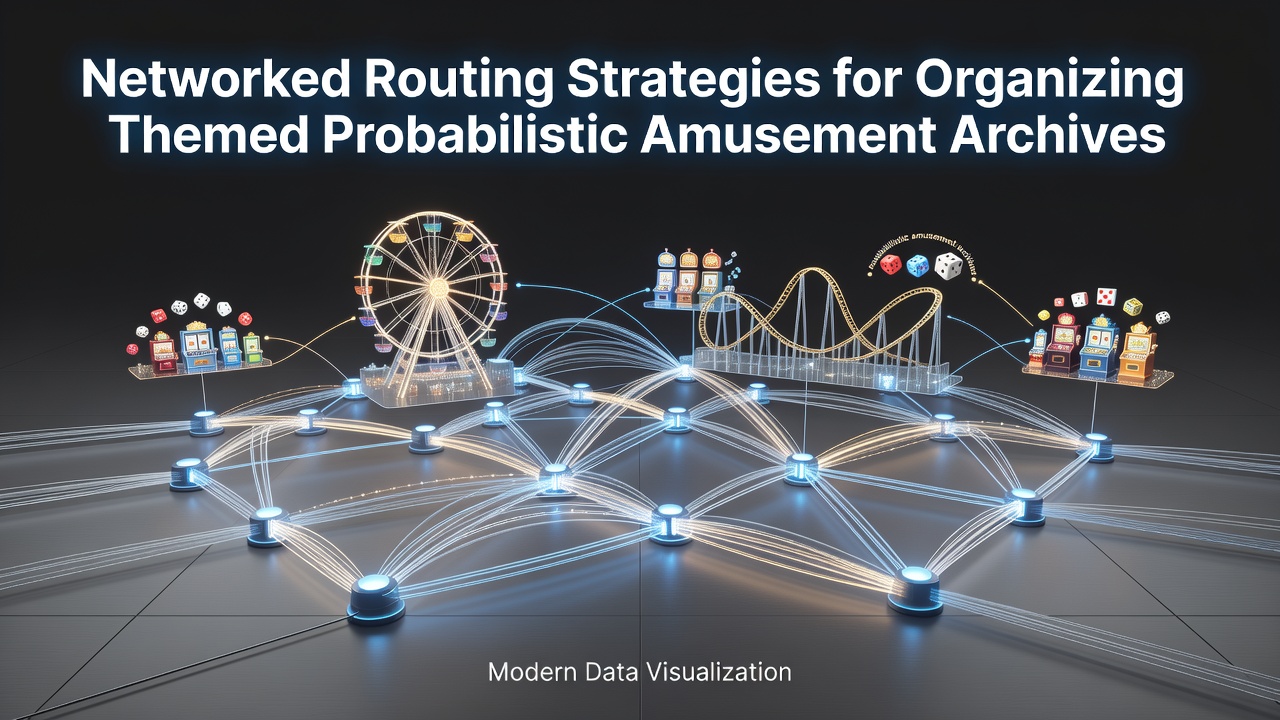
Themed probabilistic amusement archives represent specialized digital repositories that store and categorize collections of probability-based entertainment models, simulation data, and interactive content frameworks drawn from various recreational domains. These archives rely on networked routing strategies to maintain efficient access, categorization, and distribution across distributed systems. Observers note that routing protocols direct data packets through optimized pathways, ensuring themed elements such as random outcome generators and scenario libraries remain accessible without fragmentation. Core routing approaches include hierarchical path selection methods that prioritize content themes during transmission. Data packets carrying probabilistic models travel through designated nodes equipped with classification algorithms, which sort incoming information based on thematic tags before storage. This process allows archives to scale while preserving logical groupings of amusement-related probability sets.Key Components of Routing Infrastructure
Network architects design these systems around dynamic path allocation techniques that adjust in response to archive query patterns. Load balancing mechanisms distribute requests across multiple servers, preventing bottlenecks when users retrieve themed subsets of probabilistic data. Studies from research institutions indicate that such balancing reduces retrieval latency by coordinating traffic flows through redundant links.
Security layers integrate with routing decisions to verify access permissions at each hop. Authentication protocols embedded in the routing layer confirm that requests align with archive access policies before forwarding packets to storage clusters. This integration supports compliance with data management standards observed in various international frameworks.
Implementation Patterns Observed in 2026
Deployments throughout early 2026 demonstrated expanded use of adaptive routing tables that incorporate real-time thematic indexing. In July 2026, technical updates from several digital infrastructure projects highlighted refinements to these tables, allowing faster reorganization of amusement probability archives during peak query periods. These updates built on existing mesh network topologies that connect regional archive nodes through low-latency pathways.
Case examples include research facilities that adopted software-defined routing to manage growing collections of simulation archives. One project at a North American academic center utilized centralized controllers to reroute traffic around congested segments, maintaining consistent access to probability-themed content modules.

Integration with Broader Digital Ecosystems
Routing strategies connect these specialized archives to wider digital ecosystems through standardized interface protocols. Application programming interfaces facilitate data exchange between amusement probability repositories and external analytical tools, enabling researchers to pull themed subsets for further modeling. Coordination across these interfaces depends on routing rules that preserve metadata integrity during transfers.
Geographic distribution of archive nodes benefits from routing configurations that account for regional data regulations. Systems developed under European Union digital infrastructure guidelines, for instance, route sensitive probabilistic content through compliant pathways that align with cross-border transfer requirements. Similar approaches appear in Canadian federal technology frameworks that emphasize secure routing for archival materials.
Performance Metrics and Optimization
Performance evaluations track metrics such as packet delivery ratios and thematic retrieval accuracy within these routed networks. Data from academic reports shows that optimized routing configurations improve overall archive utilization rates by directing queries to the nearest available themed cluster. Continuous monitoring allows administrators to adjust path weights based on observed traffic patterns.
Future expansions may incorporate machine learning elements into routing decision engines, though current implementations focus on rule-based path selection for reliability. Those managing large-scale deployments report that incremental updates to routing firmware sustain operational stability across expanding archive volumes.
Conclusion
Networked routing strategies provide the structural foundation for organizing themed probabilistic amusement archives through systematic path management and thematic classification. These approaches enable scalable access while supporting integration across distributed environments. Ongoing refinements, including those noted around July 2026, continue to enhance the efficiency of data flows within such specialized collections.