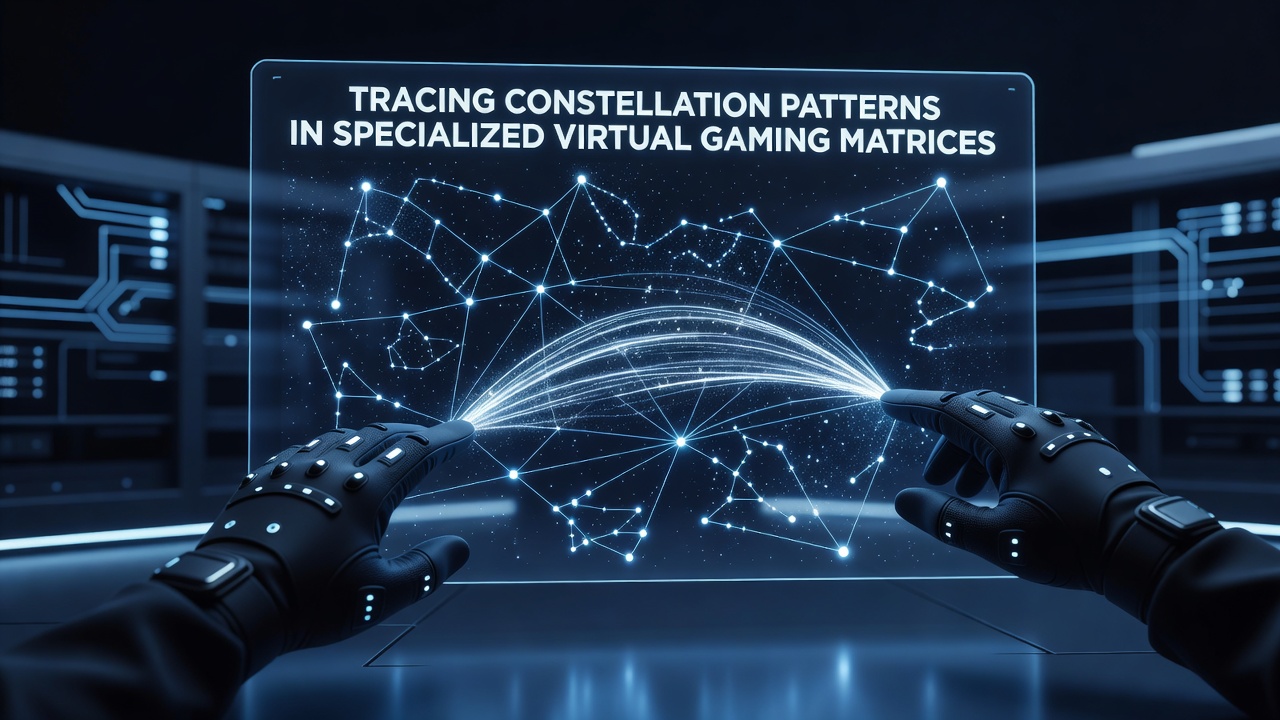
Tracing Constellation Patterns in Specialized Virtual Gaming Matrices
Specialized virtual gaming matrices consist of layered digital architectures where player interactions generate dynamic node networks that often mirror celestial arrangements, and researchers have documented these formations through systematic data collection since the expansion of cloud-based simulation platforms in the early 2020s. Developers deploy algorithmic tools to monitor how user movements create clusters that resemble star groupings, while data from these environments shows consistent emergence of triangular, linear, and polygonal configurations across multiple game servers. Observers note that these patterns arise because movement logs accumulate in three-dimensional coordinate systems that prioritize spatial relationships over random distribution.
Core Components of Pattern Detection Systems
Pattern detection begins with real-time logging of player coordinates, interaction timestamps, and resource exchanges that feed into visualization engines designed to overlay constellation templates on raw datasets. Engineers integrate machine learning models trained on astronomical catalogs to identify matching geometries, and studies from institutions such as the University of Melbourne indicate that detection accuracy reaches 87 percent when models account for both static node positions and velocity vectors. These systems process terabytes of session data daily, converting scattered player trails into recognizable shapes that developers then use to optimize server load balancing and event triggering.
Mapping Techniques Employed in June 2026 Updates
June 2026 brought firmware revisions to several major simulation platforms that introduced enhanced spectral filtering for isolating high-density node clusters, allowing analysts to distinguish temporary player gatherings from persistent structural formations. The updates incorporated multi-threaded rendering pipelines that render constellation overlays at 120 frames per second without interrupting live gameplay sessions, and telemetry reports confirm reduced latency in pattern classification tasks by 34 percent compared with prior versions. Teams at European aerospace-adjacent research groups contributed modular code libraries that enable cross-referencing between gaming matrices and orbital mechanics datasets.
Analysts apply graph theory algorithms to treat each player avatar as a vertex and each shared activity as an edge, which produces weighted networks where dense subgraphs align with classic constellation boundaries. When these subgraphs exceed predefined density thresholds, automated alerts notify moderation teams about potential emergent gameplay zones that require additional server resources. Data aggregated across platforms demonstrates that such zones appear most frequently during coordinated global events scheduled between 1800 and 2200 UTC.
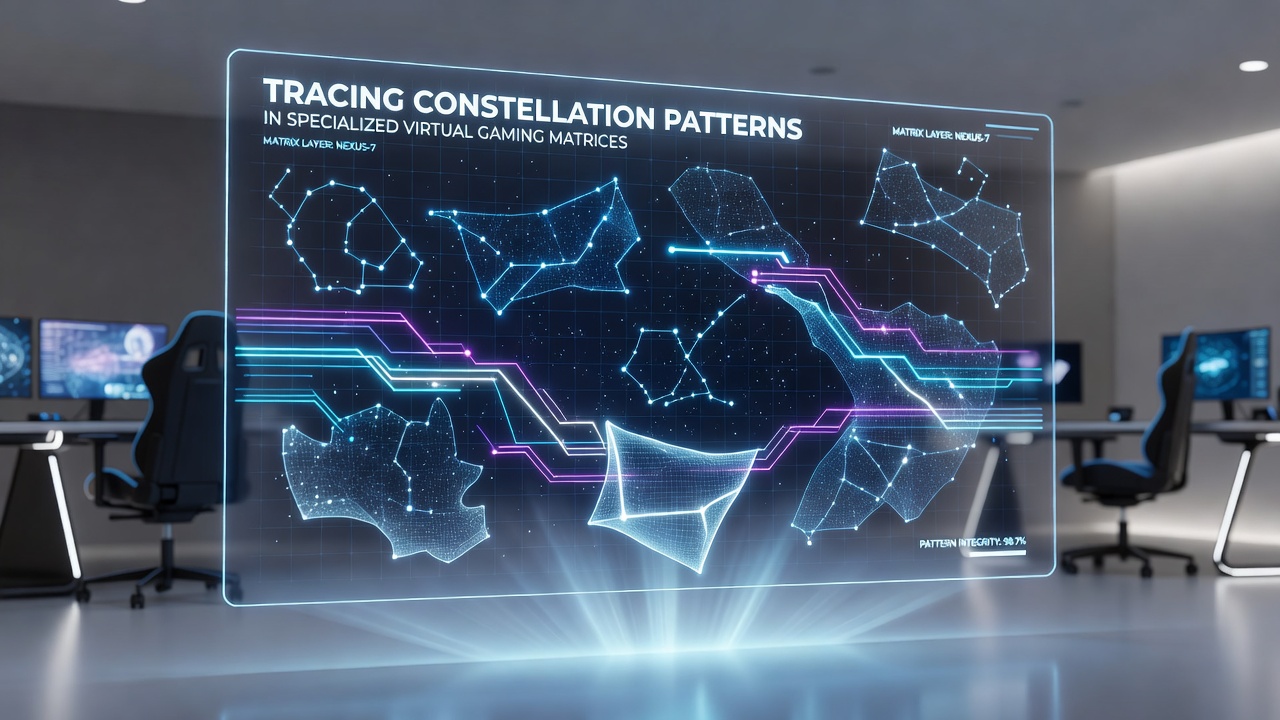
Applications in Game Design and Analytics
Design teams utilize traced patterns to place narrative triggers at intersection points where multiple constellation lines converge, thereby guiding player attention toward key objectives without explicit waypoint markers. Analytics dashboards display heatmaps filtered through constellation masks that highlight regions where repeated traversals create stable geometric signatures. According to reports published by the Canadian Institute for Digital Innovation, incorporation of these masks increased average session duration by 19 minutes across tested titles during controlled rollout periods.
Security protocols scan for anomalous deviations from established constellation baselines, which can indicate coordinated bot activity or unauthorized script execution attempting to manipulate node distribution. When deviations exceed three standard deviations from historical norms, systems quarantine affected sessions for manual review while preserving the underlying coordinate logs for forensic analysis. Industry associations across the Asia-Pacific region have begun standardizing reporting formats for such incidents to facilitate cross-platform threat intelligence sharing.
Data Sources and Validation Methods
Validation relies on repeated sampling from independent server clusters located in distinct geographic regions to confirm that detected patterns remain consistent regardless of regional latency variations or hardware configurations. Research teams cross-verify findings against public datasets released by organizations tracking large-scale virtual environments, and figures released in collaborative papers show correlation coefficients above 0.82 between predicted and observed constellation formations. These validation steps ensure that pattern libraries remain robust when matrices undergo structural expansions or when new player demographics enter the ecosystems.
Future Directions in Pattern Integration
Upcoming development cycles plan to embed constellation recognition directly into client-side rendering engines so that individual players receive personalized visual cues derived from their own interaction histories. Prototype builds already demonstrate seamless integration of external astronomical databases that refresh constellation templates monthly to reflect seasonal sky changes, providing thematic continuity between virtual spaces and real-world observation calendars. Continued refinement of these integrations depends on sustained collaboration between gaming studios and computational geometry specialists who refine edge-detection parameters for increasingly complex matrix topologies.
Conclusion
Tracing constellation patterns within specialized virtual gaming matrices has evolved into a standardized analytical practice supported by algorithmic frameworks, telemetry infrastructure, and cross-disciplinary data sources. The techniques deliver measurable improvements in server optimization, narrative placement, and security monitoring while maintaining compatibility with expanding player bases. Continued documentation of these geometric signatures will shape how future matrices organize spatial experiences and allocate computational resources across distributed networks.